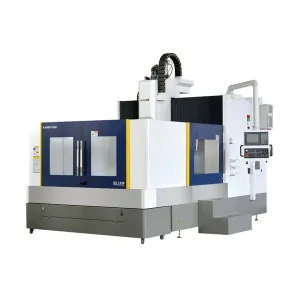
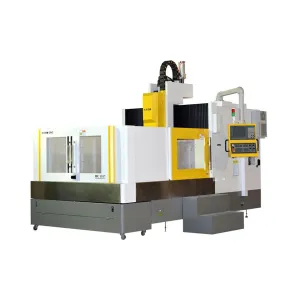
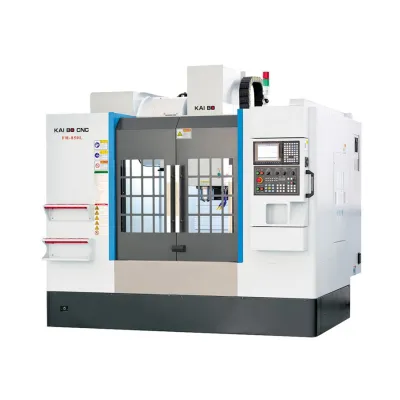
In the evolving landscape of modern manufacturing, precision and efficiency are paramount. As a leading manufacturer of CNC machine tools, Ningbo Kaibo CNC Machinery Co., Ltd. brings decades of expertise to help you understand the capabilities and applications of 3-axis, 4-axis, and 5-axis vertical machining centers (VMCs). This guide explores their structural differences, machining capabilities, and optimal use cases to assist manufacturers in making informed equipment selection decisions.
Vertical machining centers have transformed manufacturing processes with their ability to perform precise cutting, drilling, and milling operations. From the basic 3-axis configuration to advanced 5-axis systems, each offers distinct advantages tailored to specific production requirements:
Established in 1994, Ningbo Kaibo CNC has witnessed and contributed to this evolution, becoming a national standard setter for CNC engraving and milling machines while maintaining its commitment to "developing high-quality machine tools to meet customer needs."
The most common machining center configuration, 3-axis VMCs move along three linear axes:
These machines excel at producing simple to moderately complex parts with flat or shallow contoured surfaces. They offer excellent value for high-volume production of less complex components.
4-axis VMCs add a rotational A-axis (or sometimes B-axis) to the standard 3-axis configuration, typically rotating the workpiece table. This fourth axis allows:
The most advanced configuration, 5-axis VMCs provide simultaneous movement across five axes—three linear (X, Y, Z) and two rotational (typically A and C axes). This capability allows the cutting tool to approach the workpiece from any angle, making them ideal for:
| Feature | 3-Axis VMC | 4-Axis VMC | 5-Axis VMC |
|---|---|---|---|
| Initial Investment | Lowest | Moderate | Highest |
| Programming Complexity | Simplest | Moderate | Most Complex |
| Setup Time | Longest (multiple setups) | Moderate | Shortest (single setup) |
| Part Complexity | Simple to Moderate | Moderate to Complex | Highly Complex |
| Production Volume | High Volume | Medium to High Volume | Low to Medium Volume |
Choosing between 3-axis, 4-axis, and 5-axis vertical machining centers depends on several key factors:
Simple, flat parts may only require 3-axis machining, while complex geometries with multi-sided features or curved surfaces benefit from 4 or 5-axis capabilities.
High-volume production of simple parts often favors 3-axis machines, while low-volume, high-complexity parts may justify 5-axis technology.
Tight tolerance parts with complex geometries typically require the enhanced positioning capabilities of 4 or 5-axis machines.
Balance initial investment against long-term productivity gains. More axes mean higher initial cost but potentially lower per-part production costs for complex components.
"At Ningbo Kaibo CNC, we understand that every manufacturing operation has unique requirements. Our range of 3/4/5 axis vertical machining centers, combined with our expertise in custom CNC solutions, allows us to provide tailored equipment that matches your specific production needs."
With over 25 years of experience as a national standard setter for CNC engraving and milling machines, Ningbo Kaibo CNC offers distinct advantages:
Whether you require a standard 3-axis vertical machining center for high-volume production or a sophisticated 5-axis system for complex components, Ningbo Kaibo CNC Machinery Co., Ltd. delivers reliable, high-performance solutions backed by exceptional service and technical support.

 263
|
263
|
 CNC engraving and milling machine
procurement misunderstandings
industry issues
selection criteria
Ningbo Kaibo CNC Machinery Co., Ltd.
177
|
CNC machining center selection
machine tool configuration
machining precision
spindle performance
Ningbo Kaibo CNC Machinery Co., Ltd.
CNC engraving and milling machine
procurement misunderstandings
industry issues
selection criteria
Ningbo Kaibo CNC Machinery Co., Ltd.
177
|
CNC machining center selection
machine tool configuration
machining precision
spindle performance
Ningbo Kaibo CNC Machinery Co., Ltd.
 348
|
5-axis shoe last CNC milling machine
DC6070 CNC machine
shoe mold manufacturing equipment
CNC milling machine performance advantages
shoe mold processing efficiency improvement
348
|
5-axis shoe last CNC milling machine
DC6070 CNC machine
shoe mold manufacturing equipment
CNC milling machine performance advantages
shoe mold processing efficiency improvement
 60
|
5-axis shoe last CNC milling machine
DC6070
shoe mold manufacturing
complex surface machining
Syntec controller
60
|
5-axis shoe last CNC milling machine
DC6070
shoe mold manufacturing
complex surface machining
Syntec controller
 178
|
5-axis vertical machining center
multi-face milling
positioning accuracy
thermal deformation compensation
CNC parameter tuning
178
|
5-axis vertical machining center
multi-face milling
positioning accuracy
thermal deformation compensation
CNC parameter tuning