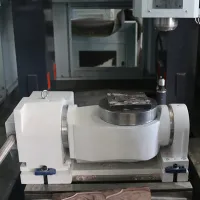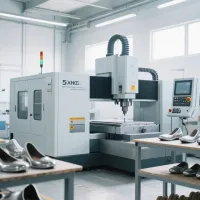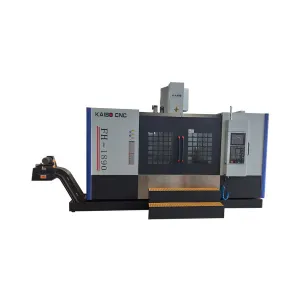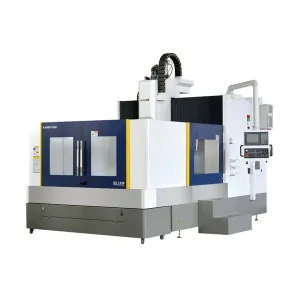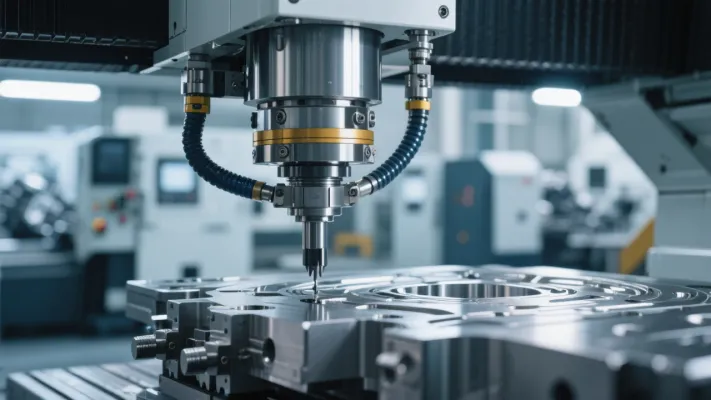
In the competitive landscape of high-precision manufacturing, 5-axis vertical machining centers have become the cornerstone of modern production facilities. Among their critical components, the tilt table stands out as a key determinant of machining accuracy, dynamic performance, and overall productivity. Over the past decade, we've witnessed a remarkable transformation in tilt table design—shifting from traditional heavy cast iron structures to advanced lightweight configurations that seamlessly integrate with Industry 4.0 ecosystems. This evolution isn't merely cosmetic; it represents a fundamental shift in how manufacturers approach complex part production, offering tangible benefits in cycle time reduction, energy efficiency, and processing versatility.
"The tilt table is the heart of any 5-axis machining center, dictating both its precision capabilities and dynamic response. As manufacturing tolerances shrink to micrometer levels and production demands accelerate, the evolution of tilt table technology has become a critical competitive differentiator." — Dr. Michael Chen, Chief Technology Officer at Kaibo CNC
Traditional tilt tables, characterized by their robust cast iron construction, prioritized rigidity over agility. While effective for stable, low-speed operations, these designs presented significant limitations in today's fast-paced manufacturing environments. A typical cast iron tilt table weighing 800-1200 kg restricted acceleration rates to 0.5-1.0 G and limited rotational speeds to 30-40 RPM. This physical constraint directly impacted production throughput, particularly for complex parts requiring frequent axis repositioning.
The industry's shift toward high-speed machining and complex part geometries demanded a new approach. Modern tilt table designs have embraced a hybrid construction philosophy, combining high-strength alloys with advanced engineering plastics and composite materials. This evolution has yielded tilt tables weighing 400-600 kg—up to 40% lighter than their traditional counterparts—while maintaining or exceeding rigidity specifications. The result? Acceleration rates reaching 2.0-2.5 G and rotational speeds up to 60-80 RPM, dramatically reducing non-cutting time and improving overall machine utilization.
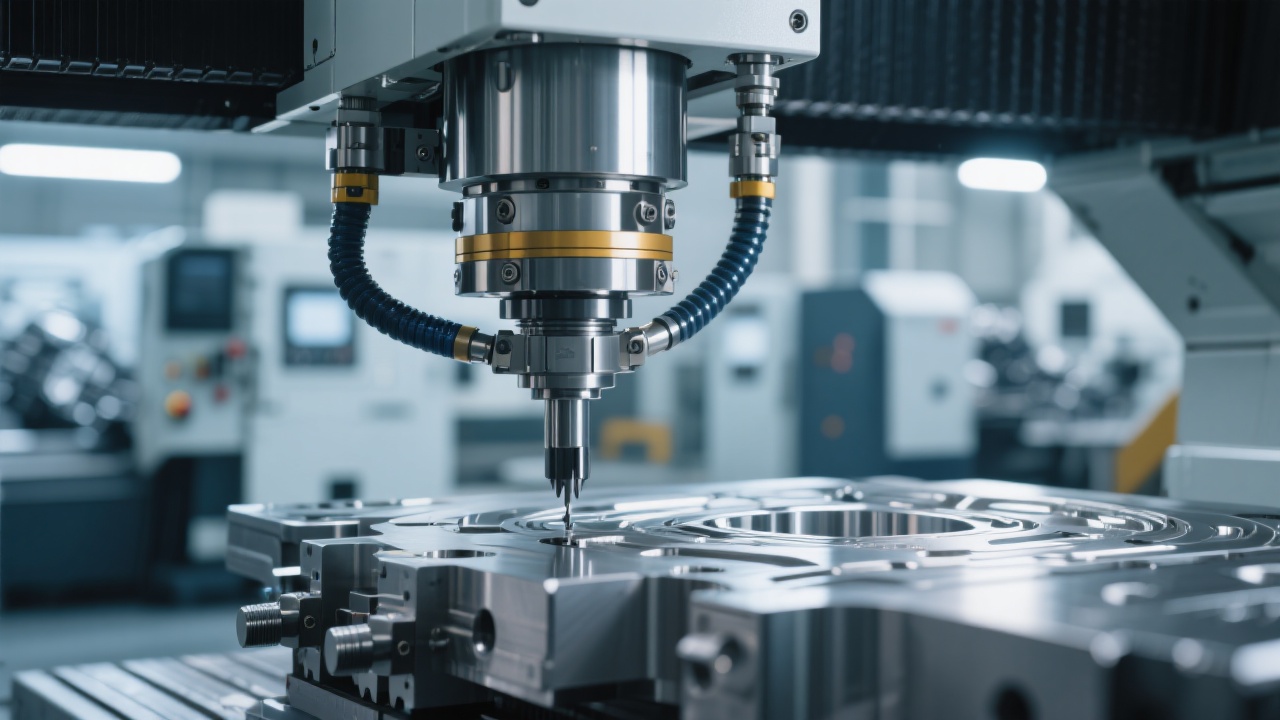
The materials revolution in tilt table construction represents one of the most significant technological advancements in recent years. Manufacturers like Kaibo CNC have pioneered the application of aerospace-grade aluminum alloys (6061-T6 and 7075-T73) and titanium alloys (Ti-6Al-4V) in critical structural components. These materials offer an exceptional strength-to-weight ratio, with aluminum alloys providing 60% weight reduction compared to cast iron while maintaining 85% of the rigidity.
| Material | Density (g/cm³) | Tensile Strength (MPa) | Modulus of Elasticity (GPa) | Weight Reduction vs. Cast Iron |
|---|---|---|---|---|
| Cast Iron (Traditional) | 7.2-7.8 | 250-350 | 100-110 | 0% |
| Aluminum Alloy 6061-T6 | 2.7 | 310 | 69 | 60-65% |
| Titanium Alloy Ti-6Al-4V | 4.43 | 900 | 110 | 35-40% |
| Carbon Fiber Composite | 1.5-1.8 | 400-600 | 120-150 | 75-80% |
Beyond raw material selection, advanced manufacturing techniques such as 3D printing and topological optimization have enabled engineers to remove unnecessary material while reinforcing critical stress points. Finite Element Analysis (FEA) simulations now allow for virtual testing of tilt table designs under extreme operating conditions, ensuring optimal performance before physical prototypes are ever produced. This combination of material science and engineering innovation has resulted in tilt tables that can handle payloads up to 500 kg while maintaining positional accuracy within ±0.001 mm.
The evolution of tilt table technology extends beyond mechanical design into the realm of intelligent systems integration. Modern tilt tables feature high-dynamic servo systems with closed-loop feedback that can achieve positioning resolutions of 0.0001 degrees. These systems, when paired with advanced PLC controls and MES integration, enable real-time data collection, predictive maintenance, and remote monitoring capabilities that were unimaginable just a decade ago.
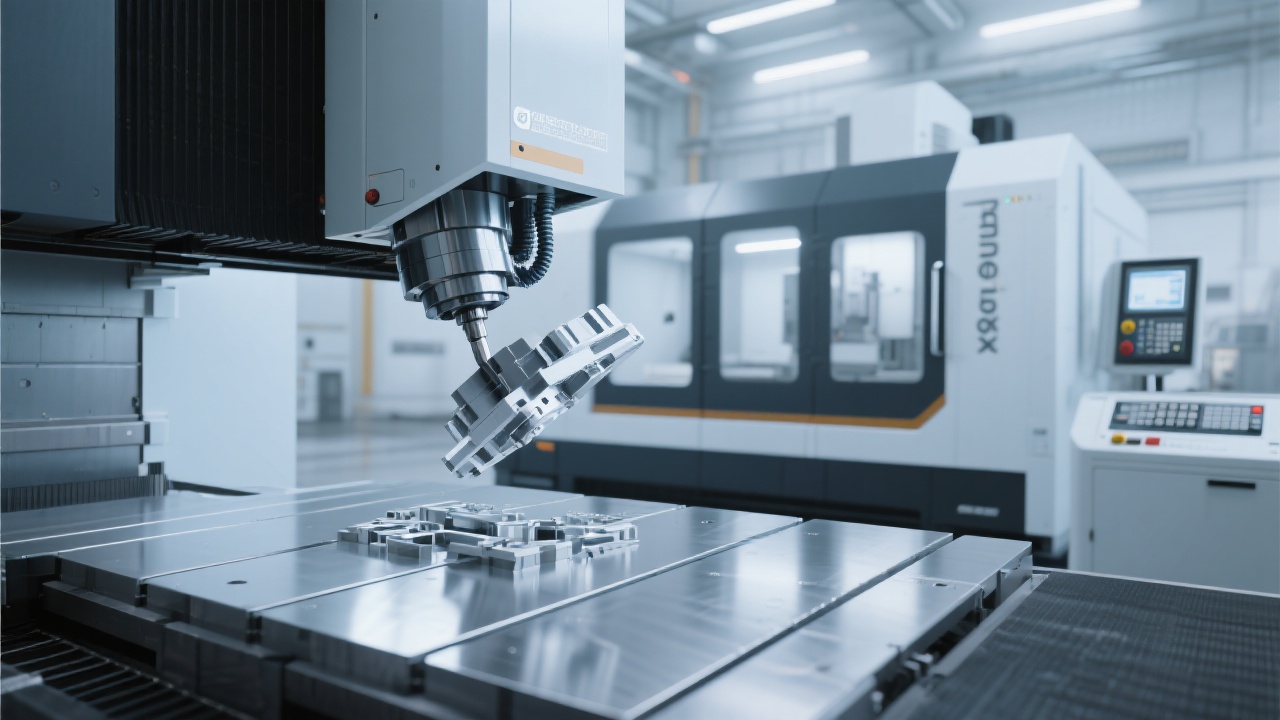
Consider the impact of this integration on production efficiency: A leading automotive parts manufacturer reported a 23% reduction in setup time after upgrading to a Kaibo CNC 5-axis machining center with smart tilt table technology. The ability to pre-program complex tilt sequences and automatically adjust for thermal expansion through real-time data feedback eliminated manual adjustments and reduced scrap rates by 18%. Similarly, a medical device manufacturer leveraging MES-integrated tilt table data saw a 35% improvement in overall equipment effectiveness (OEE) by identifying and addressing performance bottlenecks before they impacted production.
As tilt table technology advances, industry standards continue to evolve to address new capabilities and performance expectations. The recent ISO 10791-6:2022 update on test conditions for machining centers now includes specific requirements for 5-axis performance evaluation, including tilt table positioning accuracy and dynamic response testing. These standards help manufacturers make more informed purchasing decisions and ensure equipment compatibility within smart factory environments.
Looking ahead, the integration of artificial intelligence and machine learning algorithms into tilt table control systems promises further advancements. Imagine a system that automatically adjusts tilt table parameters based on material type, tooling selection, and part geometry—optimizing for both speed and precision in real-time. Additive manufacturing techniques may soon enable the production of entirely new tilt table geometries that further push the boundaries of lightweight design while maintaining structural integrity.
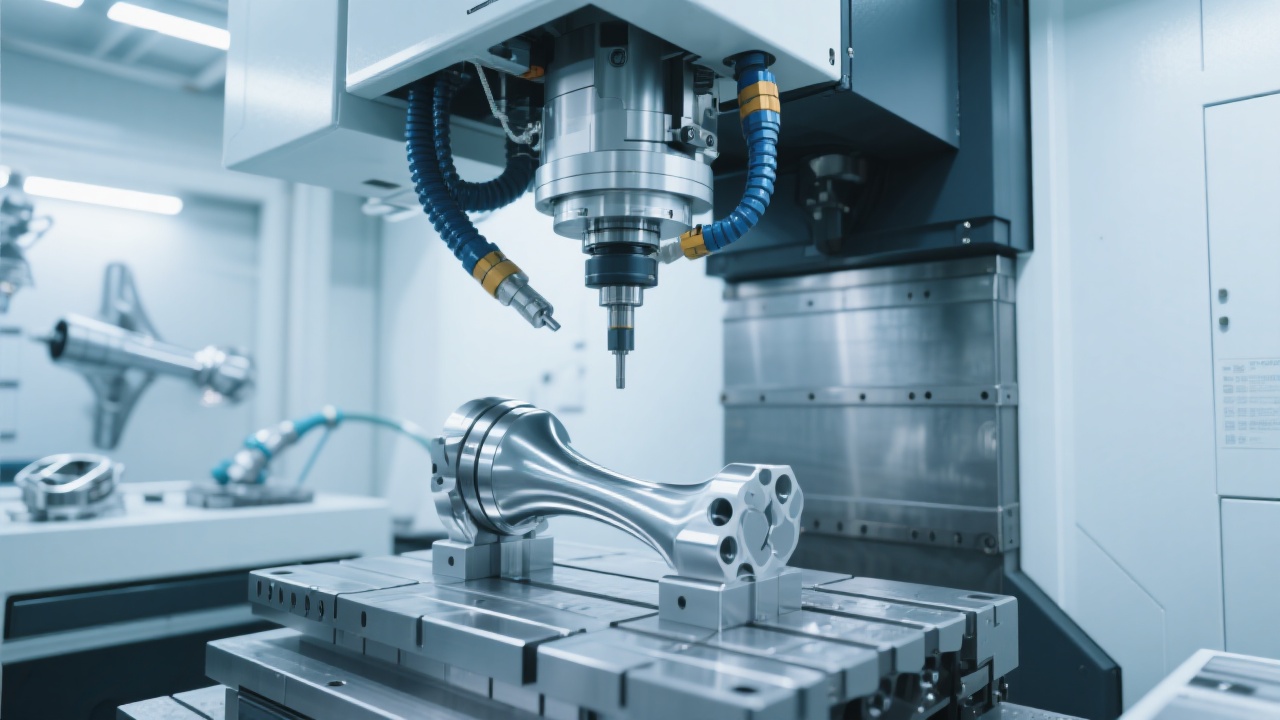
For manufacturing leaders, staying ahead of these technological curves isn't merely about keeping up with the competition—it's about unlocking new production capabilities and business opportunities. The precision and flexibility offered by advanced tilt table designs enable the production of parts that were previously considered too complex or costly to manufacture. In industries ranging from aerospace to medical devices, this technological edge directly translates to better products, shorter time-to-market, and improved profitability.
Discover how Kaibo CNC's advanced tilt table technology can reduce your cycle times by up to 40% while improving part quality and process efficiency.
Explore Kaibo CNC's 5-Axis Machining SolutionsStay ahead of the manufacturing curve with technology that anticipates your future production needs.
The journey from traditional to advanced tilt table technology represents more than just incremental improvement—it's a paradigm shift in how manufacturers approach complex machining challenges. As lightweight materials, advanced servo systems, and smart connectivity continue to converge, the potential for innovation in manufacturing processes becomes virtually limitless. For forward-thinking companies, now is the time to evaluate how these technological advancements can transform their production capabilities and position them for success in an increasingly competitive global marketplace.
 237
|
237
|
 5-axis vertical machining center
complex impeller machining
multi-face machining path planning
5-axis machining solutions
Kaibo CNC
5-axis vertical machining center
complex impeller machining
multi-face machining path planning
5-axis machining solutions
Kaibo CNC
 375
|
5-axis vertical machining center
multi-face milling
process closed-loop
high-precision machining
Kaibo CNC
375
|
5-axis vertical machining center
multi-face milling
process closed-loop
high-precision machining
Kaibo CNC
 471
|
5 axis shoe mold milling machine
shoe mold machining efficiency
DC6060A CNC machine
shoe sole mold processing
precision mold manufacturing
471
|
5 axis shoe mold milling machine
shoe mold machining efficiency
DC6060A CNC machine
shoe sole mold processing
precision mold manufacturing
 444
|
5-axis shoe mold milling machine
DC6060A CNC router
shoe mold manufacturing efficiency
rotary table CNC machining
precision footwear mold production
288
|
5-axis shoe sole mold milling machine
DC6060A CNC milling
shoe mold machining efficiency
shoe mold manufacturing equipment
CNC shoe sole milling
444
|
5-axis shoe mold milling machine
DC6060A CNC router
shoe mold manufacturing efficiency
rotary table CNC machining
precision footwear mold production
288
|
5-axis shoe sole mold milling machine
DC6060A CNC milling
shoe mold machining efficiency
shoe mold manufacturing equipment
CNC shoe sole milling