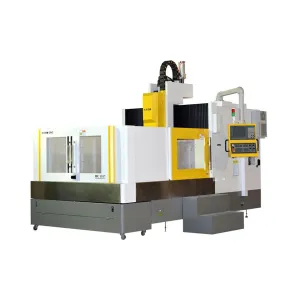
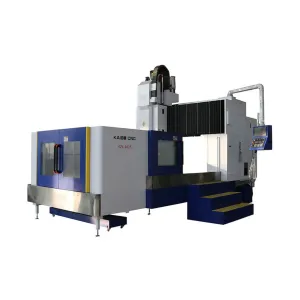
In the highly competitive shoe manufacturing industry, efficiency and precision in producing shoe molds are paramount. Traditional milling methods often struggle to keep pace with increasing demands for faster turnaround times without compromising quality. The DC6060A 5-axis shoe sole mold milling machine emerges as a breakthrough solution designed specifically to tackle these challenges head-on.
Shoe mold producers frequently encounter bottlenecks due to complex mold geometries and multi-step machining processes. Conventional 3-axis or 4-axis milling systems require multiple setups, extending cycle times and increasing labor costs. The need to improve throughput is clear: industry data suggests that even a 15–20% reduction in processing time can significantly affect overall production capacity and profitability.
The DC6060A integrates a specialized rotating worktable tailored for shoe mold applications, allowing the workpiece to be machined from multiple angles without repositioning. This design enhances machining flexibility, enabling simultaneous multi-surface cutting and drastically reducing the number of required setups.
Unlike standard milling machines, the DC6060A's 5-axis capabilities facilitate complex contours and undercuts in a single clamping. This eliminates errors caused by repeated repositioning and saves an estimated 25-30% of manual handling time.
Central to DC6060A’s performance is its rugged CNC control system, which guarantees machining precision and consistent repeatability. The CNC platform supports sophisticated tool path programming optimized for shoe molds, enhancing surface finish quality and dimensional accuracy.
This stable CNC technology also supports adaptive feed rates and real-time error correction, reducing the risk of defects and rework by up to 15%, further streamlining production workflows.
A prominent shoe mold manufacturer recently deployed the DC6060A across its production line. Through detailed time-motion analysis, the company observed a 20% reduction in shoe mold processing cycle times within three months. This acceleration was primarily attributed to the machine’s integrated rotating worktable and 5-axis flexibility eliminating multiple machining setups.
Additionally, the company reported a 12% decrease in scrap rates and improved consistency in mold quality, leading to fewer downstream issues in shoe assembly. These measurable gains translated into increased throughput and a direct impact on the company’s bottom line.
The DC6060A is more than just a milling machine—it is a strategic asset that empowers shoe mold manufacturers to outperform competitors by:
Have you encountered challenges in reducing shoe mold processing times? What strategies or equipment have you found effective? Share your experiences or questions in the comments below and join the conversation with industry peers.

 246
|
246
|
 Production Efficiency
Shoe Mold Manufacturing
Market Demands
Production Efficiency
Shoe Mold Manufacturing
Market Demands
 118
|
Vertical Machining Centers
Precision Manufacturing
CNC Technology
118
|
Vertical Machining Centers
Precision Manufacturing
CNC Technology
 363
|
Wet graphite machining center
DC6060G
Graphite electrode industry
363
|
Wet graphite machining center
DC6060G
Graphite electrode industry
 326
|
vertical machining center
product advantages
processing efficiency
technological innovation
326
|
vertical machining center
product advantages
processing efficiency
technological innovation
 343
|
Home CNC milling machine
DC6040A
High precision
low noise
stability
343
|
Home CNC milling machine
DC6040A
High precision
low noise
stability